
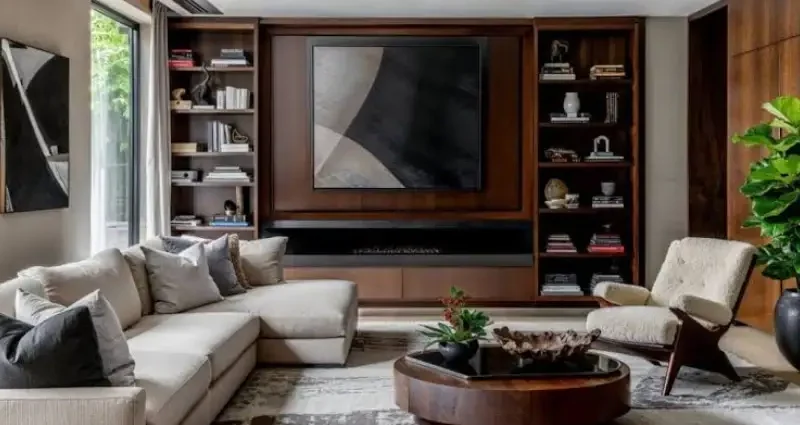
In past decades, luxury was often synonymous with glitz: heavy chandeliers, gold-leaf accents, and high-gloss surfaces. Modern luxury house interior design has shifted away from cold, sterile minimalism and loud displays toward what designers call tactile richness and quiet luxury.
True luxury in 2026 centers on three distinct pillars:
-
Sensory Materiality: Highlighting rich, natural textures that invite touch—such as hand-troweled lime plaster, fluted walnut millwork, and honed quartzite—rather than synthetic high-gloss finishes.
-
Invisible Integration: Hiding home technology behind art, paneling, and stone so that the living environment feels peaceful rather than tech-heavy.
-
Personal Tailoring: Designing functional spaces around custom daily rituals, from dedicated wellness rooms to scullery kitchens.
Modern standards replace high-gloss synthetic surfaces with tactile natural stone and wood. Invisible home automation takes the place of visible gadgets, while warm earth tones replace stark white palettes. Purposeful, wellness-focused design replaces purely ornamental choices.
5 Key Luxury Interior Design Trends for 2026
If you are planning an interior project this year, incorporating these current design movements ensures your residence feels both contemporary and timeless.
1. Warm Minimalism and Material Drenching
Stark, clinical white-and-grey rooms are officially a thing of the past. The current standard is warm minimalism, which uses a unified, earthy color palette—creamy limestones, warm taupes, terracotta, and rich chocolate browns—to create serenity without feeling empty.
Designers achieve this depth through material drenching—wrapping a room in one foundational texture, like limewash paint, and layering variations of that tone through wool rugs, linen drapery, and low-sheen timber.
2. Disappearing Technology
While modern luxury homes feature sophisticated home automation, the goal now is absolute visual discretion. In practice, this means:
-
Flush-mounted architectural speakers painted to match drywall texture.
-
Televisions concealed behind motorized artwork lifts.
-
Lighting keypads integrated seamlessly into custom stone or timber wall paneling.
3. Dedicated In-Home Wellness Suites
High-end bath design has expanded beyond simple soaking tubs. Homeowners are turning dedicated square footage into personal recovery zones. Key elements include custom cedar infrared saunas, cold plunge pools, steam showers with integrated aromatherapy, and biophilic circadian lighting that matches natural sunlight cycles throughout the day.
4. Sculptural Architecture and Curved Silhouettes
Rigid, boxy floor plans are being softened with subtle curves. Arched doorways, rounded plaster ceilings, floating spiral staircases, and organic kidney-shaped furniture soften sightlines and improve movement throughout primary living areas.
5. Dual Kitchen Architecture
In large estates and custom homes, the open-concept main kitchen remains the central hub for casual family gatherings. However, modern floor plans increasingly feature a secondary back kitchen or scullery. This secondary space houses heavy appliances, dishwashers, and prep stations—allowing caterers or hosts to prepare meals out of sight while keeping the primary kitchen island clutter-free for entertaining.
Room-by-Room Expert Design Strategies
Applying high-end interior principles requires a tailored approach for each room in your home.
The Great Room and Living Area
The primary living room sets the tone for your home’s interior design. To achieve architectural weight:
-
Scale Up the Art: Avoid small picture frames on large walls. Invest in single, large-scale original canvases or custom textile art installations that stretch toward the ceiling.
-
Layer Architectural Lighting: Combine indirect ceiling cove LEDs with decorative low-hanging pendants and floor lamps to eliminate harsh overhead shadows.
-
Anchor with Custom Millwork: Use floor-to-ceiling walnut or rift-sawn oak paneling to conceal storage, frame fireplaces, and create acoustic warmth.
The Primary Bedroom Suite
Your primary bedroom should function as a private sanctuary. Focus on tactile comfort over high-contrast visual statements:
-
Install upholstered headboard walls covered in mohair or heavy wool-linen blends.
-
Add motorized blackout shading tucked invisibly into ceiling pockets.
-
Create a dedicated seating corner featuring a sculptural armchair, reading lamp, and custom side table to establish a space separate from the bed.
Primary Bathroom and Spa
Transform daily routines into a spa-like ritual through careful stone and fixture selection:
-
Honed Stone Over Polished: Choose honed marble, travertine, or quartzite over high-gloss polished slabs to reduce glare and provide a softer, more organic feel.
-
Zero-Threshold Showers: Design walk-in showers with seamless floor drains and flush glass panels for clean line continuity.
-
Floor Heating: Always install underfloor radiant heating beneath natural stone tiles for immediate warmth.
Key Mistakes to Avoid in High-End Interiors
Even with a generous budget, interior projects can fail if foundational design principles are overlooked.
-
Prioritizing Looks Over Function: A velvet sofa that is uncomfortable to sit on or a marble countertop that stains during daily kitchen prep compromises the utility of your home.
-
Over-Illuminating Spaces: Installing too many recessed ceiling lights flattens architectural detail and creates an unpleasant visual environment. Always build layered lighting scenes with dimmers.
-
Selecting Pre-Packaged Furniture Suites: Buying an entire set of matching furniture from a single showroom makes a home look like a catalog floor rather than a curated space. Mix vintage pieces, custom artisanal work, and modern designs.
Realizing Your Design Vision
Creating an exceptional home interior comes down to intentionality. By prioritizing timeless natural materials, invisible technology, and thoughtful, personalized layouts, you can craft a home that feels both luxurious and comfortable. Modern luxury house interior design is not about following every short-lived trend—it is about investing in quality craftsmanship, seamless functionality, and a spatial flow that elevates your daily life. For more informative articles, visit our