
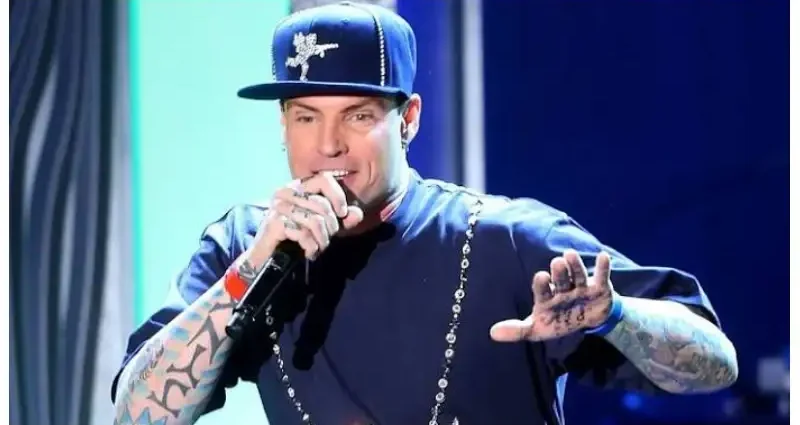
Vanilla Ice, born Robert Matthew Van Winkle on 31 October 1967, is an American rapper, actor, television personality and property entrepreneur best known for the global hit “Ice Ice Baby”. His rise was extraordinarily fast: in 1990, the song became the first hip-hop single to reach No. 1 on the US Billboard Hot 100, turning a relatively unknown performer into one of the most recognisable faces of early-1990s popular culture.
More than three decades later, interest in Vanilla Ice’s finances remains strong because his career did not end with his initial music success. He moved into television, home renovation and property investment, creating a second professional identity as a real-estate investor and renovator.
As of March 2026, Celebrity Net Worth estimates Vanilla Ice’s fortune at $20 million. However, celebrity net-worth figures are estimates rather than audited public accounts. Earlier financial disclosures provide firmer evidence of his wealth: documents connected with his 2018 divorce reportedly placed his net worth at a minimum of $10 million and showed substantial property holdings and ongoing music royalties.
This distinction matters when assessing Vanilla Ice’s net worth. His wealth today appears to come from several decades of music royalties, entertainment work and, increasingly, property-related investments rather than from “Ice Ice Baby” alone.
Early Life and Family Background
Robert Matthew Van Winkle was born in South Dallas, Texas, on Halloween in 1967. His early family life was unsettled.Vanilla Ice parents separated when he was young, and he has said that he never knew his biological father. His mother later remarried, and the family moved between Texas and Florida because of his stepfather’s work.
Miami became particularly important to Van Winkle’s development. During his teenage years, he encountered the emerging hip-hop culture that was spreading beyond New York and Los Angeles. He became interested in breakdancing and began participating in local dance battles.
His nickname developed from this period. Friends called him “Vanilla” because he was the only white member of his dance group, while “Ice” came from one of his breakdancing moves. Although he reportedly did not initially like the nickname, Vanilla Ice eventually became his permanent stage identity.
Music was not his only passion. He also developed a serious interest in motocross racing. That competitive background later became part of his public image and contributed to his interest in extreme sports.
Education
Vanilla Ice’s educational history is less clearly documented than his music career. Some biographical accounts describe him as a struggling student who frequently skipped school and eventually left formal education, while other later accounts describe him as having completed high school. Because reliable public sources do not present a consistent educational record, it is safer not to assign him a specific qualification or university degree.
What is much better documented is where his teenage interests took him. Instead of pursuing higher education, Van Winkle concentrated on music, dance, performance, and motocross. By his mid-teens, he was already writing rhymes and performing for audiences.
That early decision proved significant. Hip-hop was still developing into a mainstream commercial force, and Van Winkle learned how to combine rapping, dancing and stage performance at a time when those skills were becoming increasingly valuable to record labels and television networks.
Career Beginnings
Before international fame, Vanilla Ice performed in clubs and at parties in the Dallas and Miami areas. He developed a reputation as an energetic performer and eventually became a regular attraction at the City Lights nightclub in Dallas.
His live performances helped him establish connections with established hip-hop acts. He performed alongside artists including Tone Loc and other major performers of the era, giving him valuable exposure before he had a major record deal.
His first album, Hooked, appeared through the independent Ichiban Records label. The project attracted enough attention for SBK Records, part of the EMI group, to sign him.
The record company subsequently reworked and reissued the project as To the Extreme.
That decision changed his life.
The Rise of “Ice Ice Baby”
The story of “Ice Ice Baby” is central to understanding both Vanilla Ice’s fame and his eventual wealth.
The track initially appeared as the B-side to “Play That Funky Music”. Radio audiences, however, reacted particularly strongly to “Ice Ice Baby”, and DJs began playing it more frequently. Its momentum grew rapidly during 1990.
On 3 November 1990, “Ice Ice Baby” reached No. 1 on the Billboard Hot 100. It made history as the first rap/hip-hop single to reach the summit of that chart.
The success of the song transformed To the Extreme into a phenomenon. The album spent an extended period at No. 1 and became one of the best-selling hip-hop albums of its era. Sources differ over the precise worldwide sales figure, but contemporary and retrospective accounts commonly place its sales in the multi-million range, with some estimates exceeding 15 million copies worldwide.
This was more than an individual success. It demonstrated that rap could cross decisively into mainstream pop markets, including audiences who had previously had limited exposure to the genre.
However, the song also created controversy because its bassline closely drew on Queen and David Bowie’s “Under Pressure”. The original rights holders were not initially credited in the manner they later were, and the dispute was eventually resolved with royalty and songwriting arrangements.
That episode became an important lesson in the commercialisation of hip-hop: as sampling became central to the genre’s creative vocabulary, copyright ownership and publishing rights became increasingly important financial issues.
Major Achievements and Professional Growth
Vanilla Ice’s breakthrough was followed by an intense period of mainstream exposure. He toured internationally, appeared heavily on MTV and became a major pop-culture personality.
His 1991 film Cool as Ice attempted to turn his music celebrity into a leading film career. The film was not a commercial or critical success, and it later became famous partly because of the Razzie recognition it received.
Nevertheless, another film appearance proved considerably more memorable.
In Teenage Mutant Ninja Turtles II: The Secret of the Ooze, released in 1991, Vanilla Ice performed “Ninja Rap”. The sequence became one of the most recognisable examples of early-1990s pop culture crossing between music, film and children’s entertainment. Decades later, the performance remained a nostalgic favourite among fans.
His awards record also reflected his extraordinary commercial breakthrough. At the 1991 American Music Awards, Vanilla Ice won two awards, including Favourite Pop/Rock New Artist and Favourite Rap/Hip-Hop New Artist. He also received nominations for Favourite Rap/Hip-Hop Artist and Favourite Rap/Hip-Hop Album.
The Recording Academy also nominated him for a Grammy in 1991 for Best Rap Solo Performance for “Ice Ice Baby”. He did not win the Grammy.
Career Setbacks and Reinvention
The enormous expectations created by To the Extreme proved difficult to maintain.
As the early-1990s pop-rap boom changed, Vanilla Ice’s popularity declined. His image became the subject of widespread criticism, Vanilla Ice particularly around questions of authenticity and the presentation of aspects of his early life. Biography.com notes that some of the stories surrounding his youth and motocross achievements were later challenged, contributing to the backlash against him.
Rather than disappearing completely, however, Vanilla Ice experimented with different musical directions. He explored heavier sounds and continued releasing music while gradually expanding his work beyond recording.
This period is essential to understanding his eventual financial position. The peak of his music career was relatively short, but he did not rely exclusively on another hit single to remain professionally active.
Personal Life
Vanilla Ice’s personal life has attracted considerable media attention.
He dated Madonna for several months during 1991 and 1992, at the height of both stars’ fame. The relationship later became the subject of interviews and retrospective coverage.
In 1997, he married Laura Giaritta. They had two daughters, Dusti Rain and KeeLee Breeze. The couple separated, and divorce proceedings began in 2016; their divorce was finalised in 2019.
He also has a younger daughter, Priscilla Love, born in 2018. In later interviews and social-media posts, Van Winkle has occasionally shared glimpses of his relationship with his children while generally keeping much of his family life away from the spotlight.
Vanilla Ice Net Worth and Sources of Wealth
So, how much is Vanilla Ice worth?
The most current widely published estimate located for 2026 comes from Celebrity Net Worth, which places his fortune at $25 million. That estimate was updated on 11 March 2026.
However, readers should treat that figure as an estimate rather than a confirmed balance sheet.
The strongest public evidence comes from the financial disclosures associated with his divorce. Those documents reportedly showed that, in 2018, he had a minimum net worth of around $10 million, alongside approximately 15 real-estate properties, eight vehicles and a boat. His reported income averaged around $68,000 per month, or roughly $800,000 annually.
Perhaps most interestingly, around $400,000 a year was reportedly coming from “Ice Ice Baby” royalties at that time.
That figure illustrates why one hugely successful song can remain financially valuable decades after its release.
Real Estate and Property Investment
Real estate appears to have become a major component of Vanilla Ice’s later wealth.
He began investing in property during the 1990s and later developed expertise in renovating and flipping homes. His television programme The Vanilla Ice Project, which ran on the DIY Network, brought this side of his career to a wider audience.
His property activities also demonstrate an important distinction between celebrity income and celebrity wealth. A musician may earn large sums from records, but wealth can become more durable when those earnings are converted into income-producing or appreciating assets.
Vanilla Ice has effectively spent decades doing that conversion.
Recent reporting has continued to document his property projects. In 2025, for example, a renovated home associated with him was listed in the Houston-area market, highlighting that property development remains part of his professional identity.
Interesting Facts About Vanilla Ice
- His real name is Robert Matthew Van Winkle.
- He was born on 31 October 1967, making Halloween his birthday.
- “Ice Ice Baby” became the first hip-hop single to reach No. 1 on the Billboard Hot 100.
- He won two American Music Awards in 1991.
- He received a 1991 Grammy nomination for “Ice Ice Baby”.
- He performed “Ninja Rap” in Teenage Mutant Ninja Turtles II: The Secret of the Ooze.
- His career later expanded into television, home renovation and property investment.
- His 2018 financial disclosures provided unusually detailed public information about a celebrity’s assets, including real estate, vehicles and royalties.
Legacy and Influence
Vanilla Ice occupies an unusual position in music history.
It would be easy to describe him simply as a one-hit wonder, but that label overlooks the scale of his original success and the longevity of his career.
“Ice Ice Baby” crossed a significant cultural boundary in 1990. It proved that a rap single could become the biggest song in the American mainstream market. Although other artists had already helped popularise hip-hop, Vanilla Ice’s chart achievement demonstrated just how commercially powerful rap could become when combined with pop accessibility, MTV exposure and an instantly recognisable visual identity.
His story also reflects the complicated racial dynamics surrounding the commercial growth of hip-hop. As a white rapper entering a predominantly Black musical culture, Vanilla Ice faced questions about authenticity that many artists would not have faced in the same way. His success opened doors for later white rappers, while also illustrating the scrutiny that can accompany crossing cultural and commercial boundaries.
Perhaps his most significant achievement, though, is his ability to reinvent himself.
After the collapse of his initial pop-star image, he could have become a nostalgia act and little more. Instead, he built careers in television, renovation, construction and property. The continuing financial value of his music catalogue, combined with decades of business activity, helps explain why his estimated fortune remains substantial.
In that sense, Vanilla Ice’s story is less about one song than about turning a short period of extraordinary fame into a long-term career.
Conclusion
Vanilla Ice’s journey from Robert Van Winkle, a teenager fascinated by breakdancing and hip-hop, to one of the biggest stars of 1990 is one of the most remarkable stories in popular music.
His breakthrough with “Ice Ice Baby” made history, To the Extreme became a blockbuster album, and awards recognition followed almost immediately. Yet his career also experienced criticism, commercial decline and reinvention.
Today, the question of Vanilla Ice’s net worth cannot be answered simply by counting record sales. His financial story includes music royalties, television appearances, property investments, renovation projects and other entertainment work. Celebrity Net Worth currently estimates his fortune at $25 million, while public financial documents from 2018 offer evidence of a multimillion-dollar property portfolio and significant annual royalties.
The precise number may change, but the larger lesson remains consistent: Vanilla Ice turned one of the most explosive moments in 1990s music into a multi-decade career. His legacy is therefore not merely “Ice Ice Baby”. It is the story of a performer who survived the rise and fall of pop stardom by continually finding new ways to remain commercially relevant. For more information, visit our site daily.